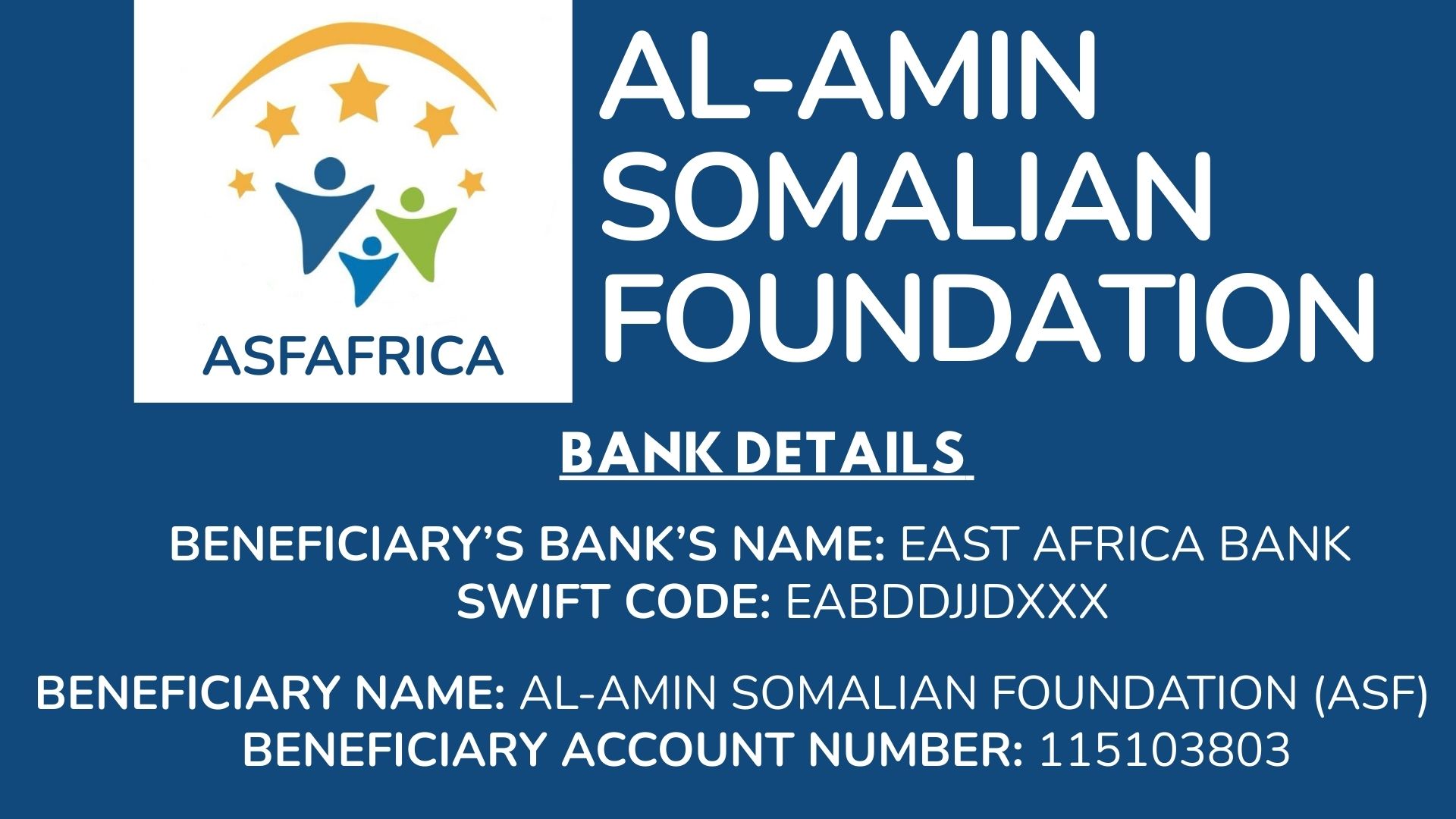
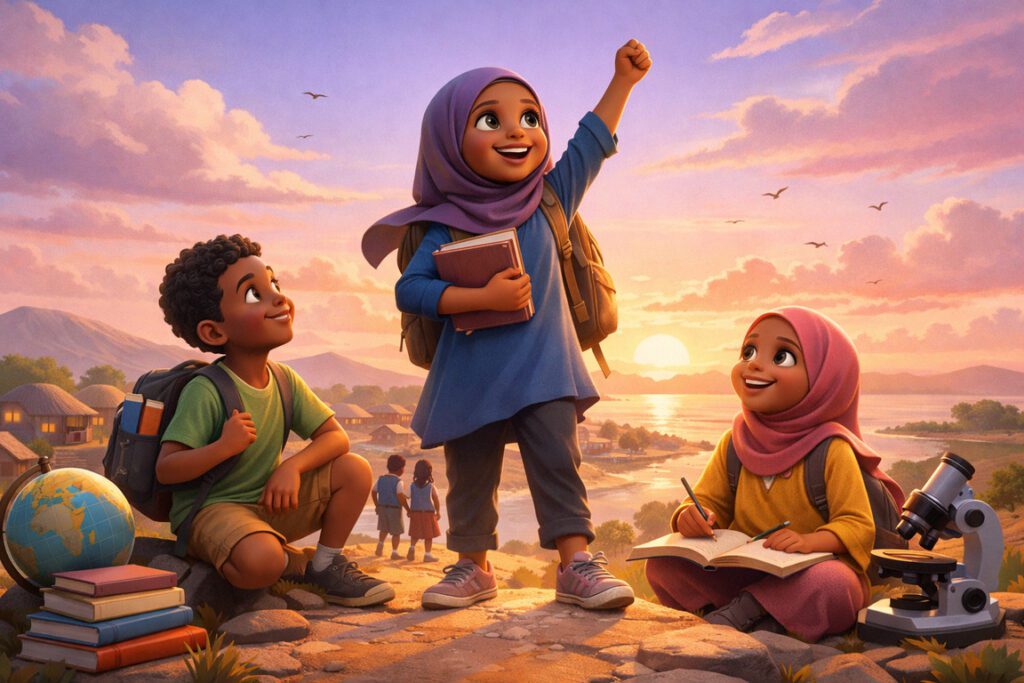
Step into any bustling street in Kismayo Calenley, and the heartbeat of possibility thrums louder than the call to prayer. Girls with notebooks tucked under their arms move past weathered stalls and winding alleys, their dreams bigger than the sky above them. Every girl in a school uniform is more than a student—she is a revolution in motion, a promise to her family, her neighborhood, and the future of Somalia. Yet, even now, many remain on the sidelines, locked out by poverty or tradition, waiting for someone to unlock their potential.
Today, the evidence rings clear: empowering girls through education rewires destinies. Research from UNESCO and the World Bank echoes across every continent—when girls learn, nations prosper, public health improves, violence wanes, and economies soar. Gender equality is not just a hashtag; it is the single most transformative lever for lifting communities. The ripple effect of one educated girl can change the trajectory of an entire village, inspiring hope where there was resignation, sparking innovation where there was stagnation.
Donors and volunteers reading these words might wonder: is it really that simple? Can opening a school gate or funding a scholarship truly change the future? Every major consulting firm, every development economist, every community leader with dirt under their fingernails says yes. From local triumphs in Somalia to global success stories in Bangladesh, the same lesson holds—girls’ education is the bedrock of real, sustainable progress. Every uniformed stride is a blow against child marriage, hunger, disease, and despair.
Journey with us as we celebrate the unsung heroines rewriting the rules. This article lifts the curtain on the stories, data, challenges, and victories that prove why girls’ education is the most urgent and inspiring cause of our age. For donors, volunteers, or anyone with a pulse for justice, what follows will move you, provoke you, and, perhaps, change the way you see the world.
Dreams Awakened: Stories of Grit and Triumph
Fatima’s mother never finished school, her days devoured by housework and survival. When Fatima, age nine, marched through the iron gates of her local primary, she carried three generations’ hopes in her backpack. Today, she reads to her younger siblings and teaches neighbors how to calculate savings, all because a scholarship from ASFAFRICA turned a closed door into a springboard.
Across town, Maryan once feared becoming another child bride, her fate sealed before she learned to write her name. Community outreach, advocacy, and a stubborn grandmother’s faith in education gave her the chance to study. Today, Maryan leads workshops for adolescent girls, sharing strategies on resisting early marriage and pursuing ambition. Her courage, amplified by education, has become contagious—one determined girl can infect a whole community with optimism.
Real progress can seem glacial. Textbooks grow tattered, teachers sometimes go unpaid, and families struggle to put food on the table. Yet, every girl who finishes her schooling is a data point in a rising trend: secondary school completion rates in parts of Somalia have doubled over the past decade. Local case studies documented by the Global Partnership for Education reveal that girls in supportive learning environments are not just passing exams—they are starting businesses, training as nurses, and speaking up at village councils.
Stories like these are not rare exceptions; they are multiplying everywhere donors and volunteers commit their support. What Fatima and Maryan share is a network—a web of teachers, mentors, and family members, plus the crucial role of NGOs like ASFAFRICA. Every success is a chorus, not a solo act. That’s why investing in girls’ education is more than a charitable gesture; it is a bet on exponential impact.
Health, Wealth, and Human Flourishing
An educated girl does not just gain knowledge; she arms her family against the harshest threats. World Bank studies confirm that mothers who complete secondary education are twice as likely to immunize their children and three times more likely to seek prenatal care. Health improves at the source, rippling outward, leading to lower infant mortality and increased life expectancy.
In the bustling markets of Kismayo, educated women teach others the importance of boiling water or preparing nutritious meals. UNICEF reports that households led by literate women have markedly fewer cases of waterborne diseases and malnutrition. This “health dividend” extends far beyond immediate families, seeping into entire villages, driving down healthcare costs, and boosting resilience during crises.
Money matters, too. The World Economic Forum found that closing gender gaps in education could boost GDP in developing economies by up to $30 trillion over a generation. In Somalia, microloans and business training offered to female graduates have enabled dozens to start tailoring shops, agribusinesses, and tech hubs. Each business run by an educated woman generates jobs, raises local wages, and, crucially, funds the next generation’s schooling.
Prosperity born from girls’ education is not only economic; it is social. Community leaders, teachers, and health workers often come from the ranks of girls who once sat in overcrowded classrooms with few resources and big ambitions. Their stories—well documented by NGOs and researchers—prove that each dollar spent on a girl’s education multiplies across decades, changing the fate of whole communities.
Shifting Mindsets: Challenging Traditions with Courage
In many Somali homes, cultural expectations still draw thick lines between girls’ and boys’ futures. Some families see education for daughters as an extravagance or even a threat to tradition. Yet, evidence shows that educated girls are the best stewards of heritage, not its destroyers.
Take the case of Asha, who learned both Somali poetry and science in school. Her mother feared that education would pull her away from their language and customs. Instead, Asha became the community’s unofficial historian, writing and sharing folk tales while tutoring classmates in algebra. Her journey reconciled the past and the present, proving that learning can be a bridge, not a wall.
Social researchers at the University of Nairobi have documented similar patterns: the more girls are educated, the less likely they are to marry early, suffer domestic abuse, or become trapped in cycles of poverty. Families that see daughters thriving begin to question old narratives about gender roles, leading to more open, democratic households. Fathers, once skeptical, now proudly attend graduation ceremonies, watching their daughters succeed in fields once closed to them.
One remarkable shift comes from seeing local role models break the mold. Communities where women hold leadership roles in councils, cooperatives, and markets report higher trust, better conflict resolution, and greater investment in public goods. Data from UN Women confirm that gender-balanced leadership delivers better outcomes for everyone—not just women and girls.
Change is rarely painless, but it is possible. Volunteers and donors who support educational programs are not fighting against tradition; they are nurturing a more inclusive, resilient version of it. Empowered girls bring their families along for the journey, blending innovation with respect for the past.
Beyond the Books: Lifeskills, Leadership, and Lasting Change
Memorizing math tables or reciting grammar rules matters, but the real magic happens outside the curriculum. Girls who stay in school develop critical thinking, negotiation, and problem-solving skills that help them navigate a rapidly changing world. These attributes are priceless in communities facing drought, conflict, or economic uncertainty.
Recent research from the Brookings Institution highlights the connection between girls’ education and disaster resilience. Somali women with secondary education organized neighborhood watches, distributed emergency food, and advocated for better sanitation during the COVID-19 pandemic. Their leadership saved lives and minimized disruption, showing that investment in education builds preparedness.
Leadership skills extend to business and politics. Somali girls who graduate from secondary school are twice as likely to run for office, lead community organizations, or launch social enterprises. Case studies from Kenya and Ethiopia offer compelling evidence: educated women become village chiefs, health officers, and legal advocates, making policy decisions that reflect community needs.
Soft skills such as confidence, teamwork, and empathy cannot be underestimated. Girls who participate in extracurricular activities—debate clubs, science fairs, sports—report higher self-esteem and lower anxiety, according to Save the Children. These experiences nurture the courage to speak up, defend their rights, and imagine a future filled with possibility.
Breaking the Cycle: Ending Child Marriage and Building New Norms
In parts of Somalia, early marriage remains an ever-present threat to girls’ education. Yet, the relationship between classroom attendance and delayed marriage is unmistakable. UNICEF estimates that each additional year of schooling reduces the risk of child marriage by up to 7 percent. The effect compounds over time.
Girls like Halima, who finished secondary school with support from ASFAFRICA, now serve as advocates against early marriage in their own communities. Their voices carry weight, inspiring others to resist harmful practices. Community dialogue, supported by faith leaders and elders, gradually shifts norms. Girls who once would have disappeared into married life at age thirteen now finish school, learn trades, and become visible contributors to society.
Ending child marriage brings cascading benefits: fewer adolescent pregnancies, better maternal health, and more children thriving in school. Real-world interventions—ranging from scholarships and mentoring to after-school programs—have proven effective in countries like Ethiopia, where similar social and economic barriers exist. Somalia’s progress, though hard-won, is a beacon for what is possible with targeted, sustained investment.
Shifting norms is never simple, but change is happening. Each girl who defies the odds chips away at the old scripts, offering an alternative narrative for those who follow. Volunteers and donors who champion girls’ education become architects of new traditions—ones rooted in possibility, dignity, and shared hope.
Agents of Peace: Girls’ Education in Fragile Contexts
Conflict and instability are harsh realities in parts of Somalia. Yet, girls’ education is one of the most potent antidotes to cycles of violence and displacement. The World Bank and UNESCO agree: investing in girls reduces community vulnerability to extremism, fosters reconciliation, and builds pathways to peace.
Girls who attend school in unstable environments gain tools to process trauma, advocate for nonviolence, and rebuild fractured relationships. NGOs like ASFAFRICA have pioneered programs where peer-to-peer counseling and life skills training accompany academic instruction. Results are promising—school retention rises, social cohesion improves, and girls become vocal proponents for peace.
Data from the African Union reveal that communities with higher female literacy rates recover faster from conflict, with less recurrence of violence. Girls educated in crisis zones often return as humanitarian workers, health professionals, or teachers, healing the wounds of war from within.
Volunteers and donors working with organizations in fragile states face unique challenges, but the rewards are profound. Every girl who graduates despite chaos carries a torch that lights the way for others. Her resilience and empathy lay the groundwork for a society where violence loses its grip.
Motherhood Reimagined: How Educated Women Raise Stronger Families
When girls graduate, their own children enjoy immense benefits. Educated mothers are far more likely to immunize infants, practice family planning, and support early childhood development. These behaviors reduce malnutrition and disease, boosting survival rates for the most vulnerable.
Longitudinal studies by the Lancet show that every additional year a mother spends in school increases her child’s future earnings and decreases the risk of stunted growth. This effect is generational—girls who become educated mothers pass along ambition, discipline, and curiosity to their sons and daughters.
Parenting workshops facilitated by female graduates are changing community habits, from handwashing routines to balanced meal preparation. These programs have measurable impacts: lower rates of anemia, fewer infections, and improved cognitive development among children. Volunteers and donors are critical in expanding access, funding training, and supporting community outreach.
When mothers succeed, their entire families rise. Investment in girls’ education is, therefore, not only a rights issue but also a strategic intervention for public health and poverty alleviation. The best way to prepare the next generation is to educate this one.
Innovation Ignited: Technology, Entrepreneurship, and Global Citizenship
Technology opens new frontiers for girls once excluded from opportunity. Somali girls now learn coding, digital marketing, and entrepreneurship in after-school clubs funded by donors and local businesses. Global consulting firms confirm that bridging the digital divide is essential for competitiveness, and girls are eager to lead.
Girls who access technology develop vital skills—problem-solving, teamwork, and creativity—that prepare them for the jobs of tomorrow. Al-Amin Somalian Foundation’s partnerships with tech hubs and universities give girls hands-on experience with software development, robotics, and social media strategy. Graduates have gone on to launch startups, mentor peers, and join international competitions.
Entrepreneurial skills drive economic transformation. Women-owned businesses in East Africa are growing at twice the rate of their male counterparts, according to the African Development Bank. Somali girls, given training and microfinance, launch ventures from tailoring to agritech. These businesses create jobs, generate revenue, and build community pride.
Global citizenship emerges when girls learn to see beyond borders. Technology enables connections with peers worldwide, exposing Somali girls to new ideas and cultures. Their stories, shared online, inspire other girls and attract international attention to the importance of investing in education. Donors and volunteers powering this movement are accelerating a quiet revolution.
The Donor and Volunteer Effect: Magnifying Impact, Changing Lives
Every classroom, scholarship, and mentoring session needs champions behind the scenes. Donors and volunteers make possible the programs that unlock girls’ potential. Their commitment is the difference between a girl dropping out and one stepping into leadership.
Local fundraising drives, global grant competitions, and volunteer hours converge to create safe, resource-rich learning environments. Donors often provide school supplies, uniforms, transportation, and even daily meals, erasing barriers for families struggling to make ends meet. Volunteers lead literacy circles, organize workshops, and mentor at-risk girls, becoming role models and lifelines.
Impact multiplies with scale. Sustained support allows NGOs like ASFAFRICA to build infrastructure, hire dedicated staff, and reach marginalized girls. The stories of successful alumni, once the recipients of charity, often become the stories that attract more support. One girl’s journey becomes a virtuous cycle, inspiring a village, a city, or an entire nation.
Transparency, accountability, and storytelling matter. Donors and volunteers who witness the direct impact of their involvement become advocates, fundraisers, and ambassadors for the cause. Their energy and investment ensure that momentum does not stall. Each dollar, hour, and shared story is a building block for the movement.
From the Classroom to the World—What Comes Next?
As the sun sets over Kismayo Calenley, girls carrying books home are not simply preparing for exams; they are designing a future where gender no longer limits ambition. Every lesson mastered, every obstacle overcome, moves Somalia—and the world—one step closer to a society where equality is reality, not rhetoric.
Change starts with vision but requires action. For donors and volunteers, the opportunity is now. Support for girls’ education is not just charity; it is legacy. Every dollar, every volunteer hour, every message of encouragement is an investment in a future that honors human potential. The next chapter depends on what we do today.
The journey is far from over. Persistent barriers remain, but the stories, data, and dreams chronicled here offer irrefutable proof that progress is within reach. Join the chorus of advocates, the wave of reformers, the network of believers fueling this movement. When you invest in girls’ education, you do not just change a life; you shift the entire narrative.
Stay connected, stay hopeful, and keep championing the cause. Tomorrow’s leaders are in classrooms right now, ready to rise—and your support makes all the difference. If you found inspiration in these stories, imagine what’s possible when the next girl unlocks her power. The best is yet to come.