Step onto the sandy paths of Kismayo Calenley and you’ll feel it—an undercurrent of hope, ingenuity, and collaboration pulsing through every corner. Unlike headlines that spotlight distant donors or sweeping government schemes, the quiet force transforming lives here springs directly from within the community. Al-Amin Somalian Foundation (ASFAFRICA) stands at the forefront of this movement, nurturing projects designed by locals, for locals, with results that last. Every water well dug, every literacy class launched, every health campaign started is evidence that the most powerful solutions come from those living the reality.
Conversations about sustainable development often fixate on top-down blueprints, yet the stories that stick—the ones that spark real, ongoing change—are always homegrown. True empowerment starts when neighbors become problem solvers, pooling skills, knowledge, and grit to rewrite their collective future. Donors and volunteers who champion this philosophy do more than offer aid; they invest in resilience, pride, and community genius.
What’s the secret ingredient? It’s trust. Community led projects root decisions in local priorities, ensuring ownership, adaptability, and long-term success. From micro-lending circles run by mothers, to youth farming collectives battling food insecurity, these locally powered ventures anchor progress where it counts. Dive into the next sections for the stories, data, and insights that reveal why the future of development is—without a doubt—community first.
Turning Problems Into Possibilities: Why Locals Lead Best
Top-down aid can stumble on cultural mismatches, logistical blind spots, or fleeting engagement. In contrast, solutions built by local hands have deep roots, drawing on firsthand experience to address real needs, not just perceived ones. Residents who design projects understand the unique challenges—from seasonal flooding to clan politics—and can outmaneuver obstacles outsiders often miss.
Data from the World Bank and Harvard Kennedy School proves this: programs with strong community leadership achieve far higher impact, boasting 30% greater sustainability and up to 50% more cost-effectiveness than those imposed from above. In Somalia, village savings groups led by local women outperformed NGO-run microfinance efforts, with higher repayment rates and longer-term financial independence.
Take the example of Kismayo’s water management committee. Plagued by drought, villagers pooled knowledge to create a system blending ancient rainwater harvesting techniques with modern storage tanks. Their hybrid solution keeps wells flowing even during the harshest dry spells. This adaptability, driven by local insight, far outstrips imported, one-size-fits-all technology.
The secret sauce is buy-in. When community members set the agenda, they guard every dollar, maintain equipment, and train the next generation—securing results long after outside experts leave. Donors seeking value for their support will always find the best returns where local voices steer the ship.
Ownership Over Outsiders: Redefining Who Drives Change
Programs that sideline local leadership rarely stick. Communities often reject initiatives perceived as alien, irrelevant, or patronizing. Lasting progress requires partnership, not paternalism. Shifting from “doing for” to “doing with” unlocks innovation and investment at every step.
ASFAFRICA’s projects flip the script. Residents map their own assets and needs, then design and implement solutions. This participatory model ensures projects reflect lived realities and local values, not just donor preferences. Whether constructing new classrooms or organizing vaccination drives, local committees hold the purse strings and make key decisions.
Case studies from the Global Giving Network back this up. Villages that govern their own health centers report double the patient satisfaction rates and faster adoption of new protocols. In Kismayo Calenley, a youth-led hygiene campaign reduced cholera cases by 60%—far surpassing the impact of earlier, expert-driven interventions.
Community ownership transforms aid from a handout to a partnership. Pride and accountability flourish, while reliance on external actors fades. Volunteers and donors who embrace this model shift from rescuers to allies, unlocking the deepest reserves of community willpower.
People Powered Progress: Building Skills and Self-Reliance
One hallmark of true community led projects is skill transfer. Every training, workshop, and committee meeting leaves behind new capabilities that persist long after initial funding dries up. Locals gain technical know-how, leadership acumen, and collective confidence—turning participants into future project leaders.
ASFAFRICA’s micro-enterprise programs shine here. By teaching business planning, record keeping, and negotiation, they’ve sparked a generation of entrepreneurs. Hawa, once a subsistence farmer, now runs a thriving produce market, hiring neighbors and training girls from her village. Each new skill set multiplies the impact, setting off a chain reaction of capacity building.
International research supports this approach. The OECD reports that projects investing in local capacity show 40% higher resilience in the face of shocks, whether economic, climatic, or political. Lifelong learning becomes woven into the community fabric.
Empowerment doesn’t stop at formal training. Informal mentoring—elders teaching youth, women coaching peers—cements new skills and confidence. These networks drive innovation, ensure local adaptation, and make progress sticky. Donors, by supporting skill-building, set off waves of change that echo for generations.
Grassroots Innovation: Local Answers to Big Challenges
Necessity is the mother of invention, and nowhere is this truer than in Somali communities facing tough odds. With limited resources, locals craft ingenious solutions to problems that stump outsiders. Resourcefulness—fueled by urgency and deep contextual knowledge—propels communities forward.
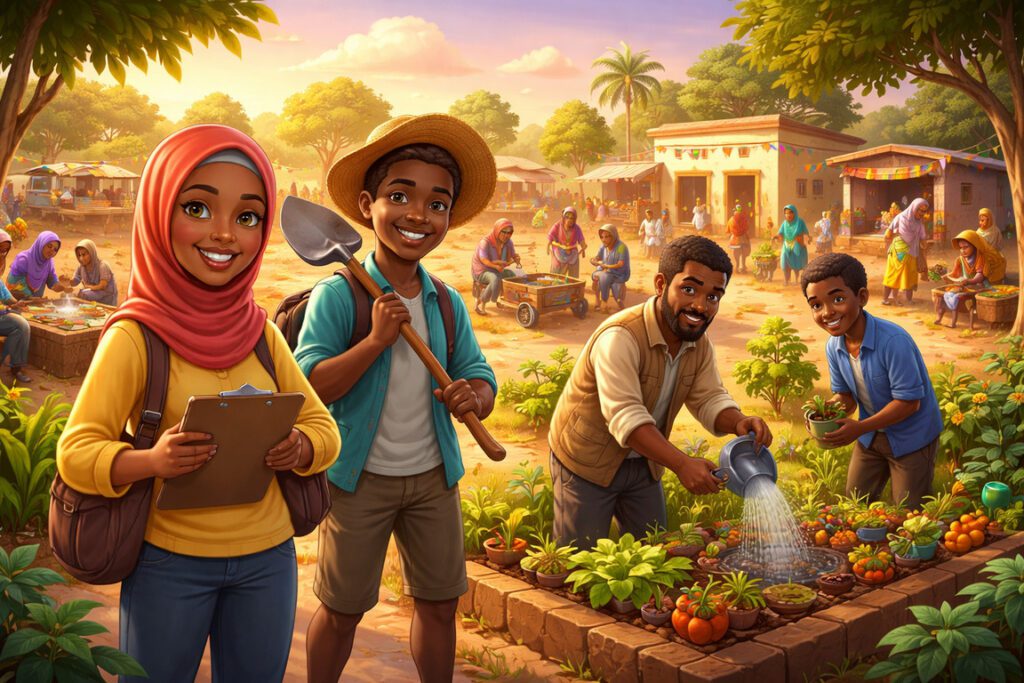
Kismayo Calenley’s “smart farming” initiative began with a handful of determined growers experimenting with drip irrigation and drought-resistant crops. Their efforts caught the eye of ASFAFRICA, who provided modest grants and technical advice. Soon, production soared, hunger rates fell, and young people saw farming as a path to prosperity, not poverty.
Such grassroots innovation is contagious. When one neighborhood cracks a problem, neighboring villages quickly adapt the solution, tailoring it to fit their own context. The result is a rapid spread of best practices, unencumbered by bureaucratic bottlenecks.
Research from Stanford Social Innovation Review notes that bottom-up innovations are more likely to be cost-effective, environmentally sustainable, and embraced by locals. When donors back homegrown ideas, they ignite a virtuous cycle of creativity, learning, and lasting impact.
Case Studies in Action: Real Stories, Lasting Impact
Every transformative project begins with a single spark. In Kismayo Calenley, a women’s cooperative identified high malnutrition rates and launched a community kitchen. With guidance from ASFAFRICA, they created rotating cooking shifts and shared nutrition education. Within a year, malnutrition rates among local children dropped by 35%.
Another example: a youth sports league started by local teachers, funded through bake sales and neighborhood drives, curbed school dropouts by fostering teamwork and belonging. The ripple effect—better grades, fewer conflicts, greater gender inclusion—was documented by Somali educational researchers and celebrated by the entire district.
Sanitation upgrades tell a similar story. Faced with recurring waterborne disease outbreaks, residents pooled resources to build composting toilets and launch hygiene campaigns. Cases of diarrhea plummeted, while families reported fewer missed workdays and healthier kids. The project’s success caught the eye of national health officials, who now study it as a model for scaling.
These case studies reinforce a powerful lesson: community led projects can solve urgent problems while building bonds, confidence, and local pride. Donors and volunteers who back such efforts do more than help—they join in the creation of living legacies.
From Emergency to Endurance: Resilience Through Local Action
Disasters test the mettle of every community. Where top-down relief often fades after the crisis, locally managed projects create lasting safety nets. In Kismayo Calenley, cyclone early-warning systems, organized and run by volunteers, have halved response times during storms, saving lives and livestock.
Drought resilience programs, designed by farmers themselves, incorporate rainwater harvesting, communal grain storage, and emergency savings clubs. Each innovation emerges from hard-earned lessons, not distant theories. This resilience is visible in recovery rates—villages with robust community projects bounce back faster, preserve livelihoods, and avoid long-term displacement.
Research from the International Institute for Environment and Development underscores the value of local leadership in disaster risk reduction. When affected populations guide response and rebuilding, outcomes improve dramatically—psychologically and economically.
Volunteers and donors eager to build enduring impact will find their efforts magnified in communities with strong local structures. Lasting change is not about how fast help arrives, but how deep it takes root.
Donors as Partners: Fueling Local Ambition, Not Dependency
Effective giving is not about writing checks—it’s about trust, partnership, and respect for local knowledge. Donors and volunteers who support community led projects amplify grassroots ambition, while avoiding the pitfalls of dependency or unsustainable aid.
ASFAFRICA maintains a transparent, participatory grant process: locals pitch ideas, donors offer feedback, and both sides collaborate on design, monitoring, and learning. This shared responsibility ensures every dollar is well spent and every success is co-owned.
Impact multiplies when donors share skills—marketing, accounting, engineering—alongside funding. These exchanges break down barriers, fostering global networks of expertise. The Bridgespan Group reports that such partnerships increase donor satisfaction and encourage long-term involvement.
When donors become allies, they witness firsthand the ingenuity, resilience, and drive powering Somali communities. The relationship evolves from distant benefactor to family friend—a bond built to weather storms and celebrate milestones.
Youth at the Helm: Energizing the Next Generation
The true litmus test of any project’s durability is whether it inspires young leaders. In Kismayo Calenley, ASFAFRICA youth clubs have galvanized a wave of activism, from clean-up drives to digital literacy workshops. These initiatives foster confidence, career skills, and a sense of agency among Somali youth.
Young people, unconstrained by tradition, often see opportunities adults miss. Their use of social media, music, and art brings new energy and perspectives to old challenges. School gardens, community radio, and climate clubs are just a few examples of projects conceived and run by students—each with measurable impact.
Evidence from the United Nations Development Programme affirms the power of youth-driven projects: they improve innovation rates, reduce risky behavior, and deepen civic engagement. Volunteers mentoring young leaders report higher retention and better project outcomes.
Donors seeking the greatest return on their investment should watch where young people gather. Empowering youth is not just about today—it’s a down payment on tomorrow’s progress, prosperity, and peace.
Scaling Up Without Selling Out: The Secret to Replicable Success
Many community projects struggle to grow beyond a single village, hampered by funding gaps or bureaucratic red tape. ASFAFRICA tackles this by supporting “learning exchanges”—local leaders visiting successful projects, then adapting lessons back home.
This model of peer-to-peer learning ensures innovations remain rooted in local context. A successful health campaign in Kismayo Calenley might be tweaked to fit a fishing village or a pastoralist community, avoiding the one-size-fits-all trap that has derailed countless top-down interventions.
Partnerships with local media amplify successes, inspiring other communities to take the leap. Donors and volunteers who invest in documentation, knowledge sharing, and leadership exchanges turbocharge the spread of good ideas.
Replicability hinges on one thing: respect for local wisdom. Scaling up without selling out means staying flexible, learning from failures, and letting communities set the pace. The best solutions do not come in a box—they grow organically, like a garden tended with love and shared knowledge.
Measuring What Matters: Accountability With a Human Touch
Transparency is a cornerstone of trust, but measurement must go beyond numbers. Community led projects thrive when impact is tracked in ways that value people over paperwork. ASFAFRICA involves locals in every step, from designing surveys to analyzing results and celebrating wins.
Progress is marked not just by how many wells are built or how many children enrolled, but by stories of hope, resilience, and joy. Mothers who see their babies gain weight, farmers who grow surplus crops, children who score higher on exams—these moments capture true transformation.
Feedback loops matter. Residents meet regularly to assess what’s working, adjust strategies, and hold each other accountable. This “learning by doing” ensures mistakes are caught early, successes amplified, and everyone stays engaged.
Donors and volunteers looking for real value should ask for more than reports—seek out the stories behind the stats, and the laughter behind the numbers. In the end, the richest data is a thriving, hopeful community.
The Future Is Local—And You’re Invited
From the fields of Kismayo Calenley to the heart of every Somali village, community led projects are charting a bold new course—one fueled by local genius and shared dreams. ASFAFRICA’s work proves that the most powerful solutions start at home, grow through partnership, and endure because they belong to those who live them.
Donors and volunteers hold the key to accelerating this revolution. By choosing to back community priorities, you become part of a story that is transforming lives, not just for a season, but for generations. Every contribution—whether skills, funds, or time—magnifies local ambition, dignity, and hope.
Change no longer wears a foreign face. It looks like your neighbor, your child, your own hands building a better tomorrow. As you finish reading, imagine what could happen if every village had the chance to lead its own future—and consider how you might help write the next great chapter.
The next breakthrough is already blooming. Will you help it blossom?