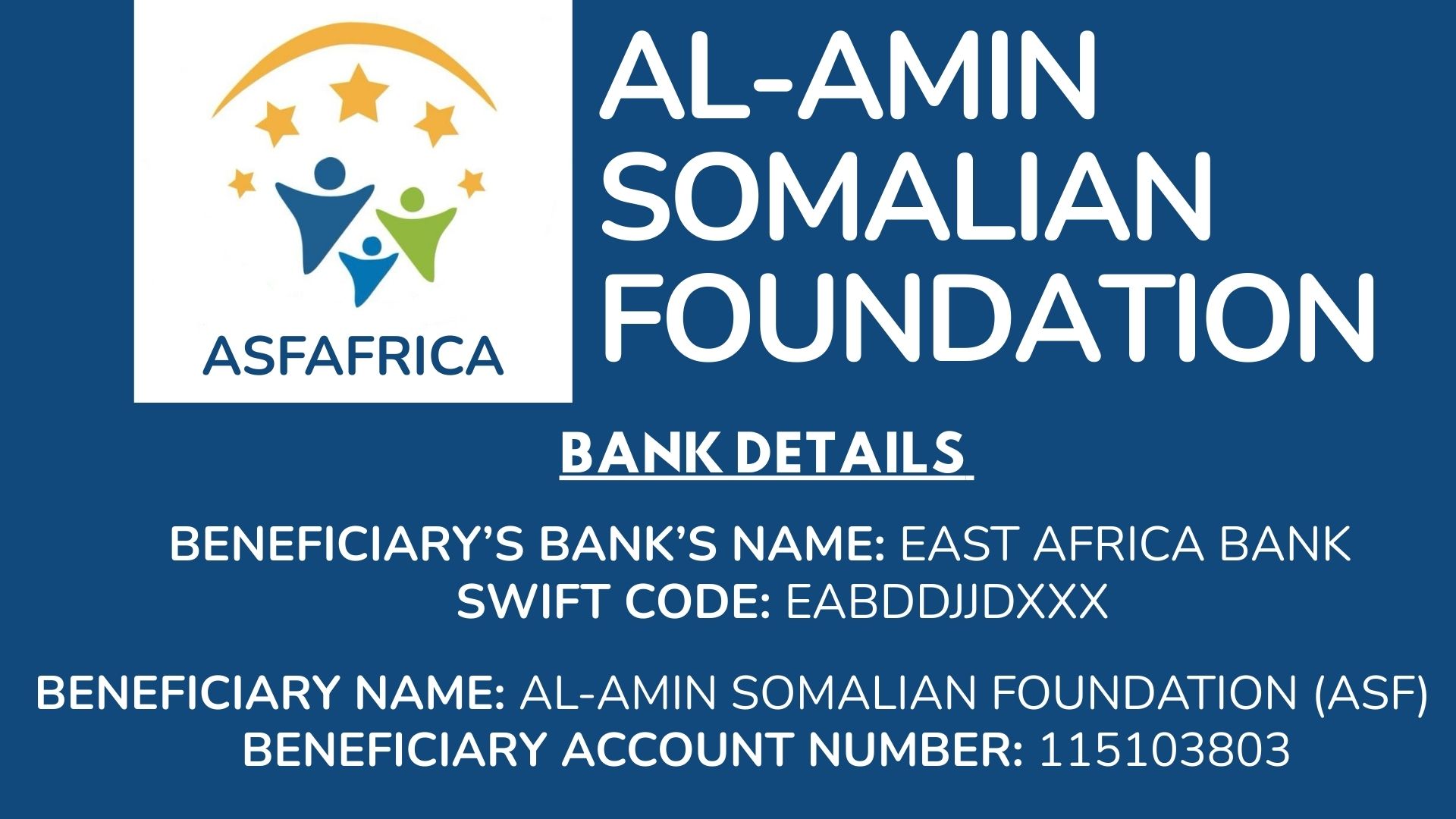

Change is rarely loud. It often whispers through daily life—an extra plate at a family meal, a child’s school uniform paid for without struggle, a new small business flourishing where there was only uncertainty before. In the neighborhoods of Kismayo Calenley, the Al-Amin Somalian Foundation (ASFAFRICA) is showing the world a simple truth: empowering women does more than lift one life; it triggers a ripple that touches everyone, remaking the community for generations.
Women are not just caretakers or homemakers. They are stewards of culture, educators of the next generation, and the engines behind local economies. Across Somalia, when a woman is equipped with resources and opportunity, her success is felt by children, elders, and neighbors. Investment in a mother’s business means better nutrition for her family, school fees paid on time, and access to healthcare for those around her.
Years of fieldwork confirm this principle. UNICEF, the World Bank, and dozens of development agencies have measured the impact: when women control income, children are healthier, more likely to stay in school, and less vulnerable to exploitation. In every story of lasting change, you find a determined woman who refused to accept limits.
Every donor who believes in sustainable progress and every volunteer looking for meaningful results will see the unmistakable value in supporting women. The miracle lies not in the magnitude of resources, but in the wisdom of investing where it multiplies fastest—one woman, one family, one village at a time.
From Margins to Center: The Rise of Women’s Voices
History is crowded with tales of women left out of decisions that shaped their own lives. In Somalia, this was not just a story of exclusion, but also one of untapped potential. ASFAFRICA’s Women Empowerment initiatives have rewritten that narrative, bringing women to the table as full partners in shaping community priorities.
Early projects faced resistance from some corners—old habits are tough to change. But community leaders soon noticed the effect of including mothers in school committees, health workshops, and local government planning. The results were undeniable: programs became more responsive, resources better allocated, and conflicts solved more quickly.
Visibility changed everything. Young girls now witness mothers debating policy, managing budgets, or running workshops. Suddenly, new possibilities replace old boundaries. The voices of women are not just heard but sought out, respected, and often trusted as solutions when crises loom.
This transformation was neither fast nor effortless. It took years of dialogue, trust-building, and living proof of what was possible. Once a community saw how women’s input made projects more efficient, transparent, and equitable, it became impossible to turn back. Progress became the new tradition.
The Financial Leap: Microloans Spark Lasting Prosperity
Access to capital remains the dividing line between subsistence and entrepreneurship for many Somali women. Traditional lenders, burdened by prejudice or risk-aversion, too often close their doors to female applicants. ASFAFRICA intervened, introducing microloans and savings groups that provide more than money—they offer confidence, training, and community.
Khadra, a widow in Calenley, launched a soap-making business with her first small loan. Within months, she repaid the funds, hired two neighbors, and funded her youngest daughter’s school fees. Her story is not rare. Dozens of women replicate this pattern, each venture giving birth to more opportunity.
Microfinance is not about charity. It is about restoring agency and dignity. Repayment rates among women-led groups in Somalia are consistently above 90 percent—a testament to their commitment and ingenuity. Businesses diversify, children’s nutrition improves, and savings cushion families during tough seasons.
What’s most compelling is the domino effect: empowered women mentor others, forming rotating savings groups and business networks that grow exponentially. The entire local economy benefits, proving that lifting one woman’s income can raise the fortunes of a whole town.
Health at the Heart: Mothers as Wellness Champions
In Somalia, mothers are the first responders, health educators, and caregivers. When women are empowered with knowledge and access to resources, family and community health metrics soar. ASFAFRICA’s community health programs focus on building networks of female health ambassadors who guide neighbors in nutrition, hygiene, maternal care, and disease prevention.
Workshops in Calenley don’t just teach—they listen. Women share folk wisdom, dispel dangerous myths, and advocate for early medical intervention. Pre- and post-natal support leads to lower infant mortality, and mothers pass along best practices in breastfeeding, vaccination, and sanitation.
Critical thinking is essential for long-term impact. Health initiatives led by women challenge superstition, address taboos, and create spaces where questions about reproductive health or chronic illness can be addressed without shame. Peer support means advice is trusted, acted upon, and repeated until change becomes routine.
Community health improves rapidly where women lead. Absenteeism drops in schools, local clinics see fewer emergencies, and infectious disease is contained through education and coordinated care. The health of a single mother often predicts the wellness of the entire village.
Education Unleashed: When Girls Learn, Societies Advance
Educating girls does not just benefit individuals—it drives generational progress. Years of global evidence show that communities with higher rates of female literacy enjoy lower child mortality, better family planning, and more stable economies. In Calenley, ASFAFRICA’s scholarships and mentorships for girls yield exponential returns.
Barriers persist, but targeted solutions work. School uniforms, sanitary supplies, and transportation vouchers keep girls in classrooms. Community campaigns reshape attitudes, making it normal—not novel—for girls to attend school and dream big. Role models, especially women teachers, show students the possibilities that education unlocks.
Girls who complete secondary school are less likely to marry early and more likely to enter the workforce. Families become more resilient, able to weather shocks and seize opportunities. The investment in a girl’s learning quickly becomes a community asset, as she shares skills, ideas, and optimism with her peers.
Mentoring deepens the effect. Alumnae return to guide younger students, offering advice, encouragement, and practical strategies for overcoming obstacles. The result is a virtuous cycle, where each generation raises the next even higher.
Leadership at Every Level: Shattering Glass Ceilings
The real story of Somali women’s empowerment is told in boardrooms, council meetings, and grassroots movements. ASFAFRICA invests in leadership training for women—public speaking, negotiation, civic engagement—ensuring they can advocate for themselves and their communities on any stage.
Local governance shifts when women participate. Public works become more equitable, social safety nets strengthen, and conflict resolution is more effective. The data is clear: female-led councils allocate resources more fairly, and projects finish on time with less corruption.
Emerging leaders often start small—organizing a market clean-up or chairing a parents’ meeting—but quickly gain skills and confidence. Their impact expands as they serve on school boards, direct NGOs, or enter politics. Each new appointment breaks stereotypes, proving competence where there was once doubt.
Mentorship accelerates progress. Veteran leaders coach newcomers, sharing wisdom and navigating the inevitable pushback from those resistant to change. Solidarity is both armor and fuel, inspiring future leaders to reach even further.
Breaking Chains: Tackling Violence and Discrimination
No real empowerment occurs without addressing violence and discrimination. Somali women face challenges rooted in harmful traditions and systemic inequalities. ASFAFRICA’s approach is both compassionate and relentless: creating safe spaces for survivors, teaching legal literacy, and promoting zero tolerance for abuse.
Legal clinics run by the foundation connect women with their rights, guiding them through processes often shrouded in secrecy. Survivor-led advocacy groups reduce stigma, ensuring that no woman faces trauma alone. Education campaigns in schools and mosques reinforce the message that violence is never justified.
Engaging men and boys is crucial. Programs designed for fathers and brothers break cycles of silence and complicity. Healthy masculinity is celebrated, not dismissed. Families that reject violence see immediate benefits: stronger bonds, healthier children, and greater prosperity.
Policy wins matter. Every time a survivor receives justice, every new shelter opened, and each public statement against discrimination strengthens the social contract. The ripple effects cannot be overstated. Progress in this realm changes the emotional climate of communities, making empathy and accountability the new standard.
Networks of Change: Sisterhoods Fueling Progress
Women’s networks are the scaffolding on which community progress is built. From rotating savings groups to advocacy alliances, these sisterhoods offer not only resources but also protection and mutual encouragement. ASFAFRICA helps women organize for collective bargaining, community improvement, and self-defense.
Peer-to-peer learning spreads best practices in business, health, and education. Networked women quickly spot risks, identify opportunities, and coordinate action—whether running a cooperative farm or advocating for water rights at the district level.
Mutual aid is both tradition and innovation. In difficult seasons, women share food, child care, and housing. During celebrations, these same networks amplify joy, pooling funds for weddings, births, and graduations. Social capital, though invisible, proves more resilient than any bank account.
The networks’ influence extends to policy. United voices push for better laws, more equitable services, and real accountability. When donors or volunteers seek impact, investing in women’s networks ensures that progress is protected and passed along to future generations.
From Local to Global: Women’s Influence Beyond Borders
Empowered Somali women do not just improve their communities—they become models for the world. Stories of transformation travel fast, inspiring diaspora, global NGOs, and international agencies to invest in similar models. ASFAFRICA’s women leaders speak at conferences, mentor young activists, and advise on best practices for sustainable change.
Digital technology multiplies the effect. Women-led campaigns harness social media, mobile money, and e-learning to connect isolated villages, share information, and coordinate advocacy. Innovations born in Kismayo Calenley now inform projects as far away as Nairobi, Cairo, and Washington, D.C.
Cross-border alliances grow. Somali businesswomen trade with counterparts in Kenya, Ethiopia, and beyond. Advocacy groups lobby for regional policy reforms, from maternal health to fair trade. The boundary between local and global blurs when women are empowered to lead.
The most powerful impact is philosophical. Somali women’s success stories challenge stereotypes, inviting donors and partners to see Africa as a source of leadership, not just need. Investing in women here yields dividends everywhere.
The Chain Reaction Continues
The evidence is overwhelming: empower a woman, and you empower an entire community, both now and for generations to come. The logic is irresistible, the results measurable, and the stories unforgettable. ASFAFRICA’s work in Kismayo Calenley proves that investing in women is the highest-yielding strategy for those who want to make a real, lasting difference.
A grandmother’s microloan keeps grandchildren in school. A mother’s health knowledge saves lives. A daughter’s diploma inspires new norms. Each success plants the seed for another, creating an unbreakable chain of progress. The future is written by those who have the courage to challenge tradition, dismantle injustice, and invest in new possibilities.
Donors, volunteers, and partners who join this cause are not just supporting individual women—they are underwriting the transformation of Somalia’s social, economic, and political landscape. The invitation is open: witness the power of women to unlock generational change and build a legacy that will endure for centuries.
Let today be the day you join this movement. Bring your resources, your expertise, your faith in the extraordinary capacity of women. The next chapter is unwritten, but with your support, it will be a story of hope, equality, and unstoppable generational progress.